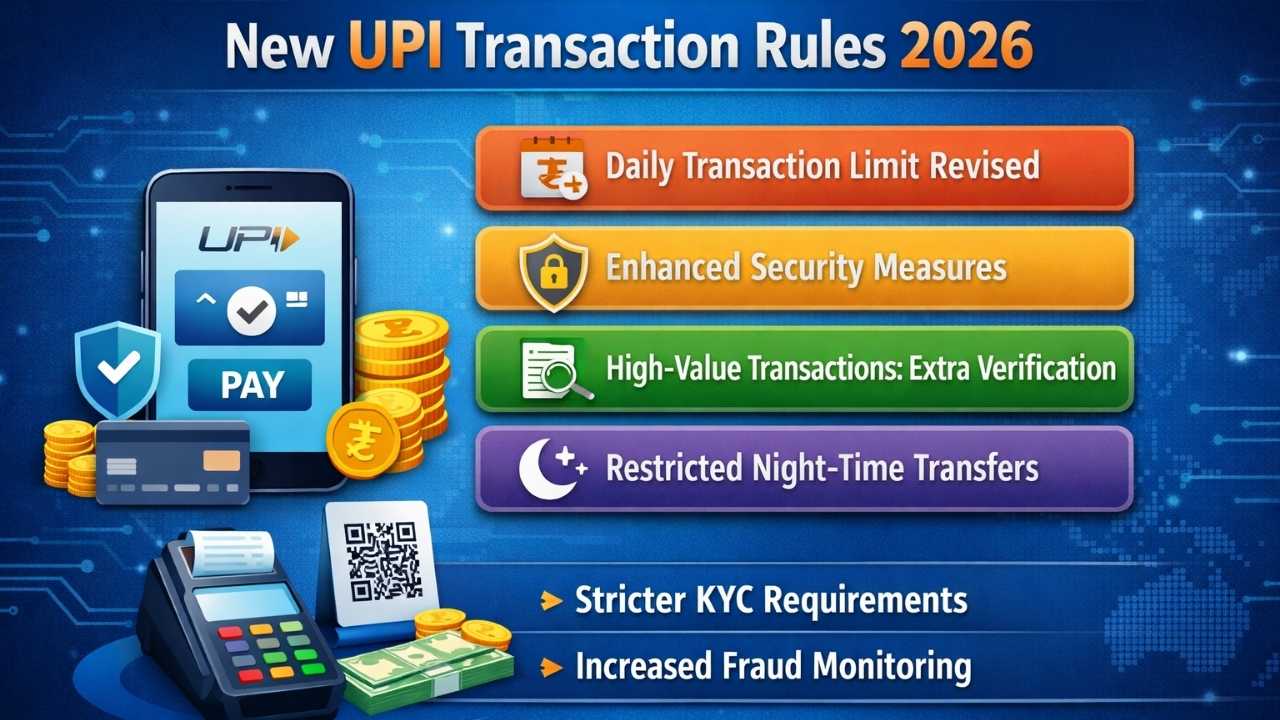
New UPI Transaction Rules 2026: The Unified Payments Interface has transformed digital payments in India by making money transfers quick, easy, and secure. With rising usage, new transaction rules have been introduced to improve system stability, security, and user experience. These updates aim to ensure smooth operations while supporting high-value digital transactions across sectors.
The revised guidelines include changes in transaction limits, safety restrictions, settlement timings, and usage rules. These rules help prevent fraud, reduce server load, and enhance reliability. Understanding these updates is important for users, merchants, and businesses that rely on daily UPI payments for financial activities.
Also Read: EPS-95 Pension Hike 2026 Latest Updates, Government Plans, And Expected Benefits For Retirees
Understanding New UPI Transaction Limits and Daily Transfer Rules
UPI users can generally transfer up to ₹1 lakh per day through person-to-person transactions. Many banks also allow a limited number of transactions per day, often around twenty. These limits help manage risk and prevent misuse while keeping payments smooth and efficient.
Higher limits are allowed for certain categories such as hospitals, educational institutions, tax payments, and IPO applications. In these cases, transactions up to ₹5 lakh may be permitted. Some verified merchant payments in sectors like insurance and capital markets may allow up to ₹10 lakh daily.
Also Read: Nippon India Silver ETF Share Price Target Forecast And Growth Analysis From 2026 To 2030
UPI Charges Details and Free Payment Reality
For regular users, UPI transfers remain free. Sending money to friends, family, or merchants using bank accounts does not include any transaction charges. This has helped increase digital payment adoption across the country.
Some merchants may pay interchange fees depending on the type of payment they receive. However, customers do not pay any extra charges while using UPI for normal transfers or QR code payments, making it one of the most affordable digital payment systems.
Also Read: Start Saving ₹42 Monthly and Get Guaranteed Pension up to ₹5000 After Retirement: Check Key Details!
UPI New Rules 2026 Overview
| Feature | Details |
|---|---|
| Standard daily transfer limit | ₹1 lakh |
| Special category limit | Up to ₹5 lakh |
| Verified merchant limit | Up to ₹10 lakh |
| New user first day limit | ₹5,000 |
| Typical daily transaction count | Around 20 transactions |
| Charges for users | Free |
| Balance check limit | 50 times per app daily |
| Account view limit | 25 times per app daily |
| UPI Lite per transaction | ₹1,000 |
| UPI Lite daily usage | ₹10,000 |
| UPI Lite wallet balance | ₹5,000 |
| Settlement cycles | 9 AM to 9 PM in intervals |
| Autopay timing | Processed during off-peak hours |
Time Restrictions and Settlement Window Updates
UPI settlements now take place in structured time cycles between 9 AM and 9 PM. These timed settlements help manage high traffic and ensure that transactions are processed smoothly throughout the day without system overload.
Autopay payments such as subscriptions and recurring bills are shifted to non-peak hours. This change reduces congestion during busy hours and improves the chances of successful transactions without delays or technical interruptions.
Also Read: Post Office RD Scheme 2026: Turn ₹5000 Monthly Savings into ₹8.5 Lakh Guaranteed Fund
Safety Limits for New Users and Fraud Prevention
For newly registered users, a temporary limit of ₹5,000 is placed during the first 24 hours. This rule helps prevent fraud and misuse when a new account is activated or linked for the first time.
This safety step is especially useful in stopping suspicious activities. It allows banks to monitor new accounts and ensure that the user is genuine before allowing larger transactions after the initial period.
Also Read: Latest LPG Prices In India February 2026 Update Shows Rise In Commercial Cylinder Rates
Restrictions on Balance Checks and Account Access
Users can check their bank balance up to 50 times per day on a single UPI app. This limit has been introduced to reduce excessive system requests and ensure that servers remain stable for important payment transactions.
Similarly, account viewing requests are restricted to about 25 times per day per app. These limits help maintain performance and prevent unnecessary load on banking networks and payment infrastructure.
UPI Lite Limits for Small Value Payments
UPI Lite is designed for quick, low-value payments without needing frequent bank authentication. Users can make transactions of up to ₹1,000 at a time, making it ideal for small everyday expenses.
The total daily spending limit through UPI Lite is around ₹10,000, and the maximum wallet balance is capped at ₹5,000. This feature ensures fast payments while keeping financial risk low for small transactions.
Bank Specific Policies and Transaction Variations
Different banks may set their own limits based on risk policies and customer profiles. Some banks may allow lower daily limits such as ₹25,000 or ₹50,000, especially for new users or accounts with limited transaction history.
These bank-level restrictions help control fraud and protect customers. Over time, as trust builds and usage increases, limits may be adjusted based on account activity and security checks.
Reasons Behind New UPI Rules and System Changes
The main purpose of these updated rules is to improve payment success rates and protect users. With millions of transactions happening daily, system stability is essential for maintaining trust in digital payments.
These changes also help manage high traffic, reduce technical failures, and strengthen fraud detection. By balancing convenience and safety, the system supports both small users and high-value institutional payments.
Impact of Revised Rules on Daily Digital Payments
For regular users, the rules do not create major difficulties because the standard ₹1 lakh daily limit is enough for most daily needs. Free transfers continue to make UPI attractive and widely used across the country.
Businesses and institutions benefit from higher limits, which support large transactions. Overall, these changes strengthen the payment system, improve security, and ensure reliable digital transactions for everyone.